In progress
LedgerSense
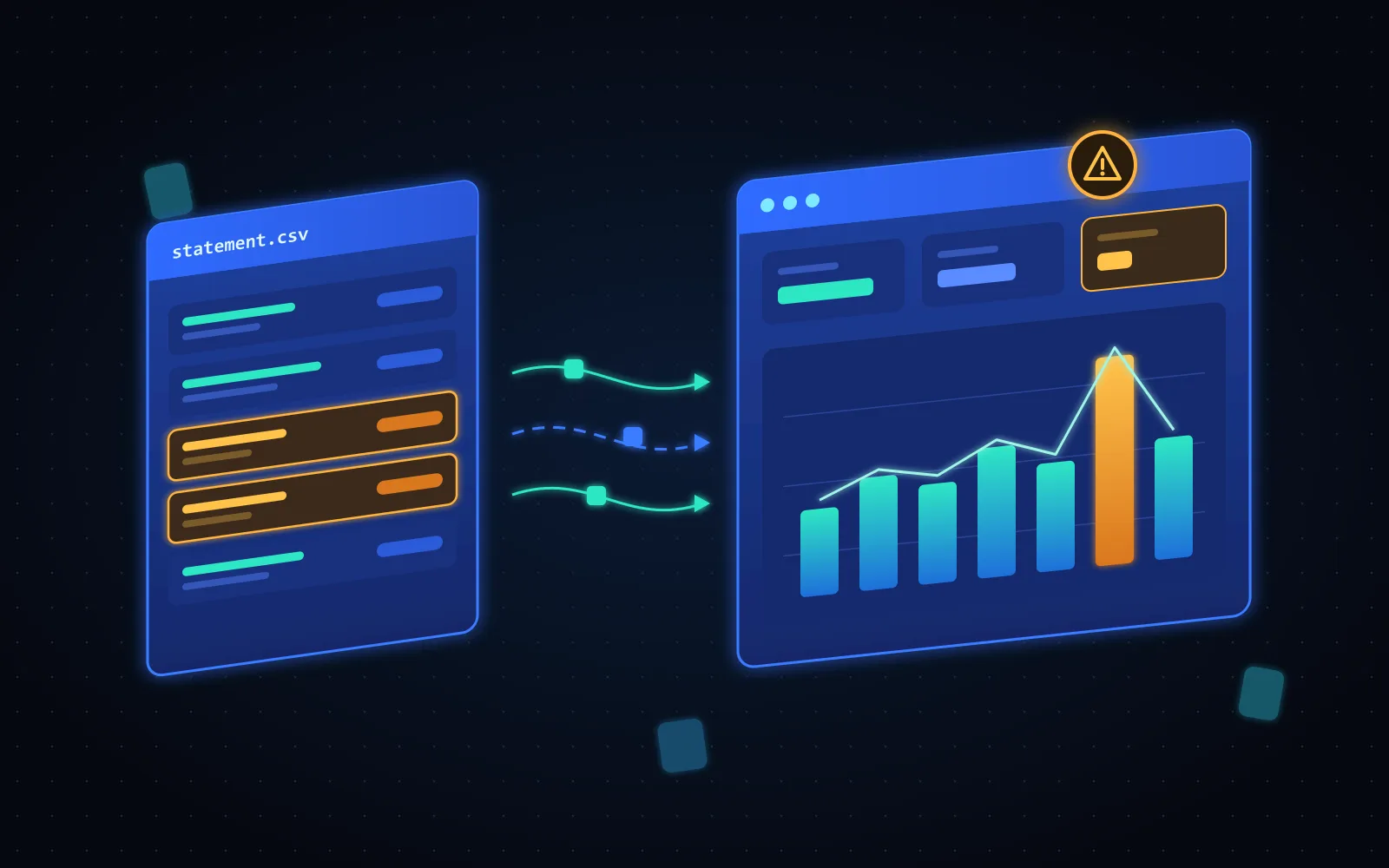
A finance intelligence dashboard for small businesses, currently in development. The plan is to import bank statements, categorise spending automatically, and flag unusual activity such as duplicate charges, unexpected spikes, and creeping prices, with a plain-language explanation for each flag. It's built with a Spring Boot and PostgreSQL backend and a Next.js frontend.
- Technologies
- 8
- Key features
- 9
- In progress
- WIP
The Problem
Small business owners often only look at their bank statements at month end, if at all, so duplicate charges, forgotten subscriptions, and suppliers quietly raising prices go unnoticed. LedgerSense aims to turn a raw statement into a categorised view of spending that points out what deserves a closer look and why.
My Role
Sole developer, responsible for the architecture, backend, database design, frontend, and deployment. I'm recording the key design decisions as Architecture Decision Records in the repo as I go.
Key Features
- Bank statement import (planned)
- Automatic transaction categorisation (planned)
- Monthly spending trends and comparisons (planned)
- Anomaly detection for duplicate charges, unusual spend, and price creep (planned)
- Plain-language explanations for every flagged transaction (planned)
- Modular monolith organised by business domain (ADR 0001)
- Non-guessable UUID primary keys generated by PostgreSQL (ADR 0002)
- Versioned database migrations with Flyway
- PostgreSQL in Docker Compose, configured through environment variables
Challenges
The first decisions were about structure. With one developer and modest data volumes, separate microservices would add deployment work without any benefit, so LedgerSense is one Spring Boot app split into packages by business domain (ingestion, categorisation, detection, and so on) rather than by technical layer. Each domain owns its own controllers, services, and repositories, which keeps feature changes local and leaves room to pull a module out later if that's ever needed. Because record IDs appear in API URLs, primary keys are random UUIDs instead of sequential integers, so IDs can't be guessed or used to estimate business volume. That is defence in depth: scoping every query to the user's organisation is still the main protection.